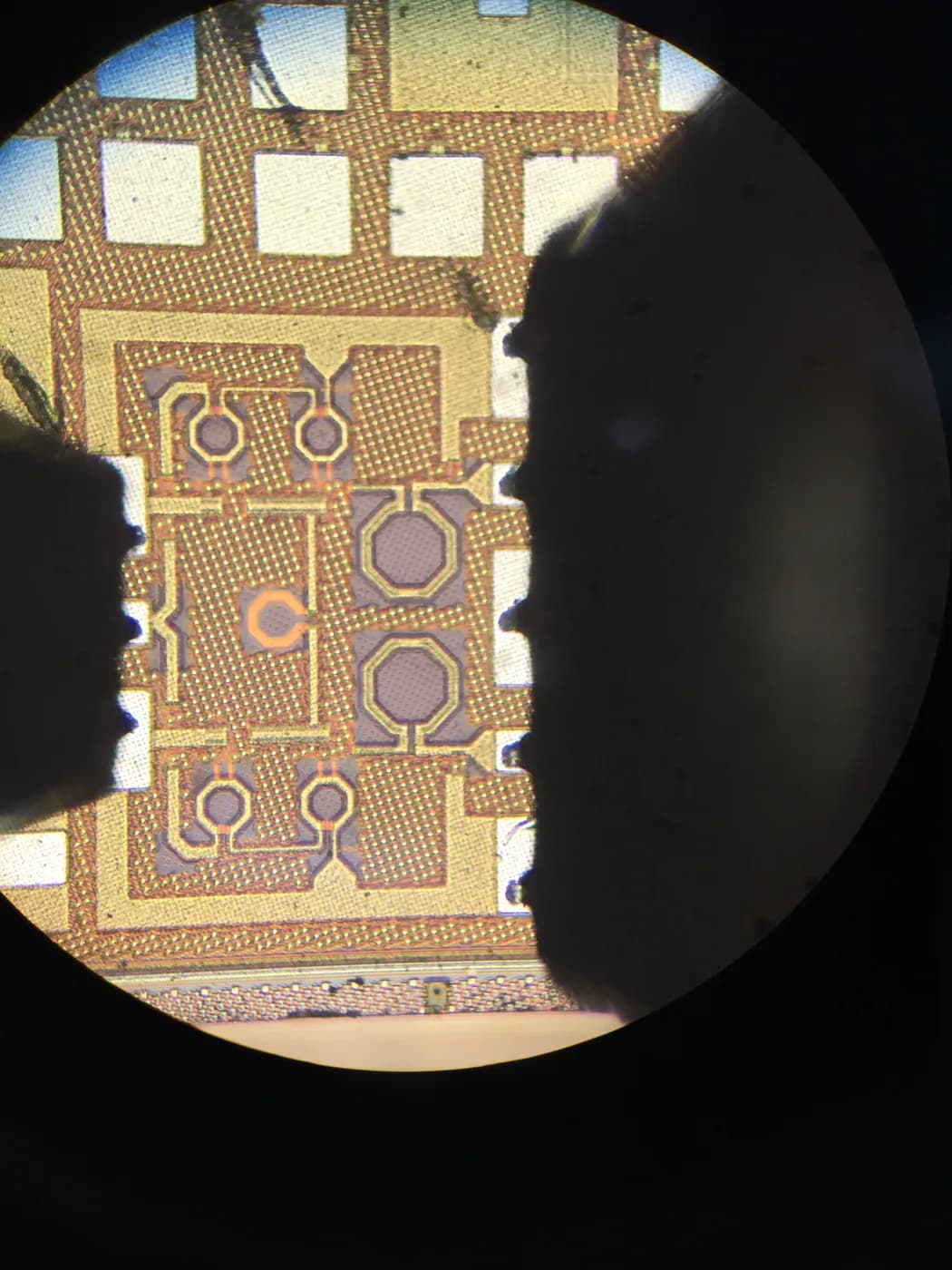
This is a real preparation, not a composite. The program targets SMIC 40 nm Low Leakage at 1.1 V and 2.5 V, and the three gaps below were raised with the foundry before layout closed. Names and figures that belong to the customer are withheld; the technical content is reported as it stands.
Most tape-out delays that look like design problems are delivery problems. The design was fine; the library, the extraction techfile or the capacitor option the circuit assumed was never in the package that got handed over.
The library set in use
The program is running on SMIC 40LL, a 1.1 V / 2.5 V low-leakage logic process. The delivered kit contains a standard cell library in three threshold-voltage flavours — low, standard and high Vt — released in October 2024; a 3.3 V I/O cell library on a much older release, which is normal; a Cadence OA-format PDK; and a PLL hard macro.
That is a normal-looking kit. It is also the shape of kit that hides the three problems below.
Gap 1: no parasitic extraction techfile
The delivered standard cell library does not include the matching QRC technology file. Without it, post-layout extraction cannot run, which means every post-layout timing, power and noise number is provisional.
This is the most common of the three and the cheapest to close, because the fix is a request rather than a design change. The risk is sequencing: place-and-route can proceed happily without the file, so the absence surfaces only when the first extraction run fails — by which point layout decisions have been frozen against an estimate.
Extraction techfiles are frequently delivered separately from the standard cell library rather than inside it. Checking that the file exists and matches the library version is a five-minute task in week one.
Gap 2: MOM capacitors only, MIM marked optional
The delivered PDK contains MOM capacitors only. The documentation states MIM capacitors are optional for the process, and the program needs them.
The two are not interchangeable. MOM capacitors are formed from the interconnect stack itself, so they cost no extra process layer but have lower capacitance density and worse matching. MIM uses a dedicated dielectric layer with far better density and matching. Any design carrying precision RC, a PLL loop filter, a reference or a data converter needs to know which one it is getting, because the answer changes the area and the achievable accuracy.
If MIM is optional and the circuit requires it, that is a request to make at kit release time. Receiving a MIM-enabled kit revision after layout has started means re-doing the affected blocks.
Gap 3: hard IP terms for an NTO run
The third question was commercial rather than technical: what does the node's PLL cost when the wafer is run as a dedicated NTO rather than as a shared shuttle? The two can be quoted differently, and the answer affects whether the macro is used at all.
The same check applies to any foundry-supplied memory compiler output: compiler version, node support, and whether the generated instances are covered by the delivered extraction and verification decks.
The checklist this program produced
Every item below is answerable in an email before layout starts. Getting the answers in writing matters more than getting them quickly, because a verbal confirmation of a file that later turns out to be absent is worth nothing at the point where it costs a tape-out slot.
- Full list of delivered libraries with version and release date, per type
- Confirmation that extraction techfiles matching those versions are included
- Confirmation of whether MIM capacitors are enabled in the delivered PDK revision
- Availability and commercial basis for each hard macro when the run is NTO rather than shared
- Pad library voltage domains, ESD levels and version against the core library
- What the turnaround is if any of the above has to be re-released
Outcome
The three gaps were identified and raised before layout closed, which is the whole point of the check — finding them while they are a request rather than a re-spin. Each one was closed against the programme's requirements, and the kit delivered met what the design needed.