RF programs live and die by iteration. For an LNA and RF switch transceiver we supported, the goal was not one perfect tape-out but a fast, repeatable loop of build, measure and refine.
Over twelve months the team completed three MPW shuttle runs. Here is how the cadence was managed without burning budget or losing focus.
Why three runs instead of one big one
RF performance depends on parasitics you can only measure on silicon. A single large run would have delayed all learning behind one long cycle.
Three focused runs let the team validate matching, linearity and switch isolation incrementally, changing one variable at a time.
Keeping MPW cost under control
Each run was a shared shuttle, so the non-recurring cost stayed a fraction of a dedicated mask set.
The discipline that mattered was scope: every shuttle had a named hypothesis and a defined set of measurements, so we never taped out 'to see what happens'.
- One hypothesis per run
- Pre-written measurement plan before tape-out
- Die area kept small to fit shuttle pricing tiers
- Probe cards reused across runs where possible
What the die photography was for
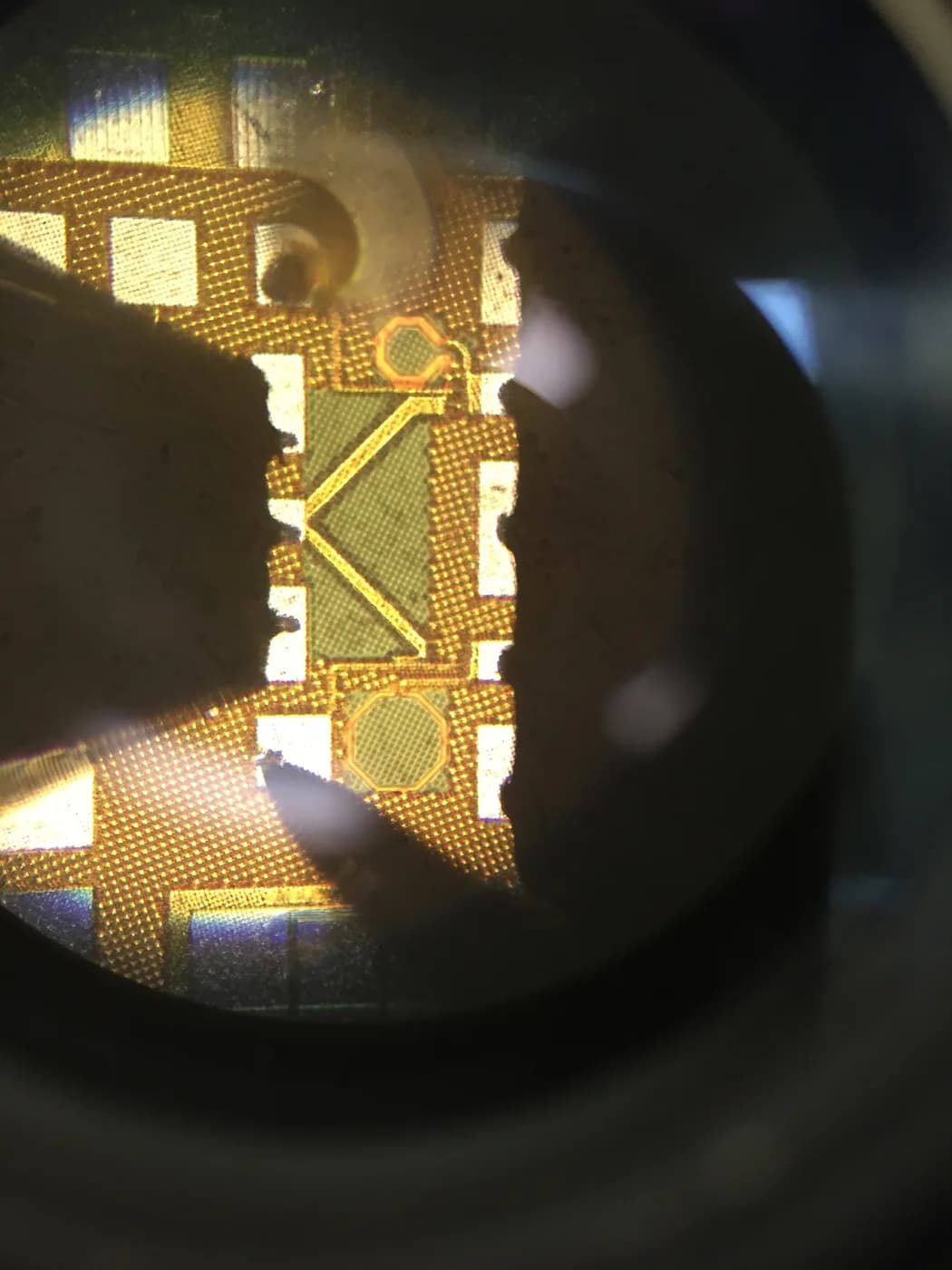
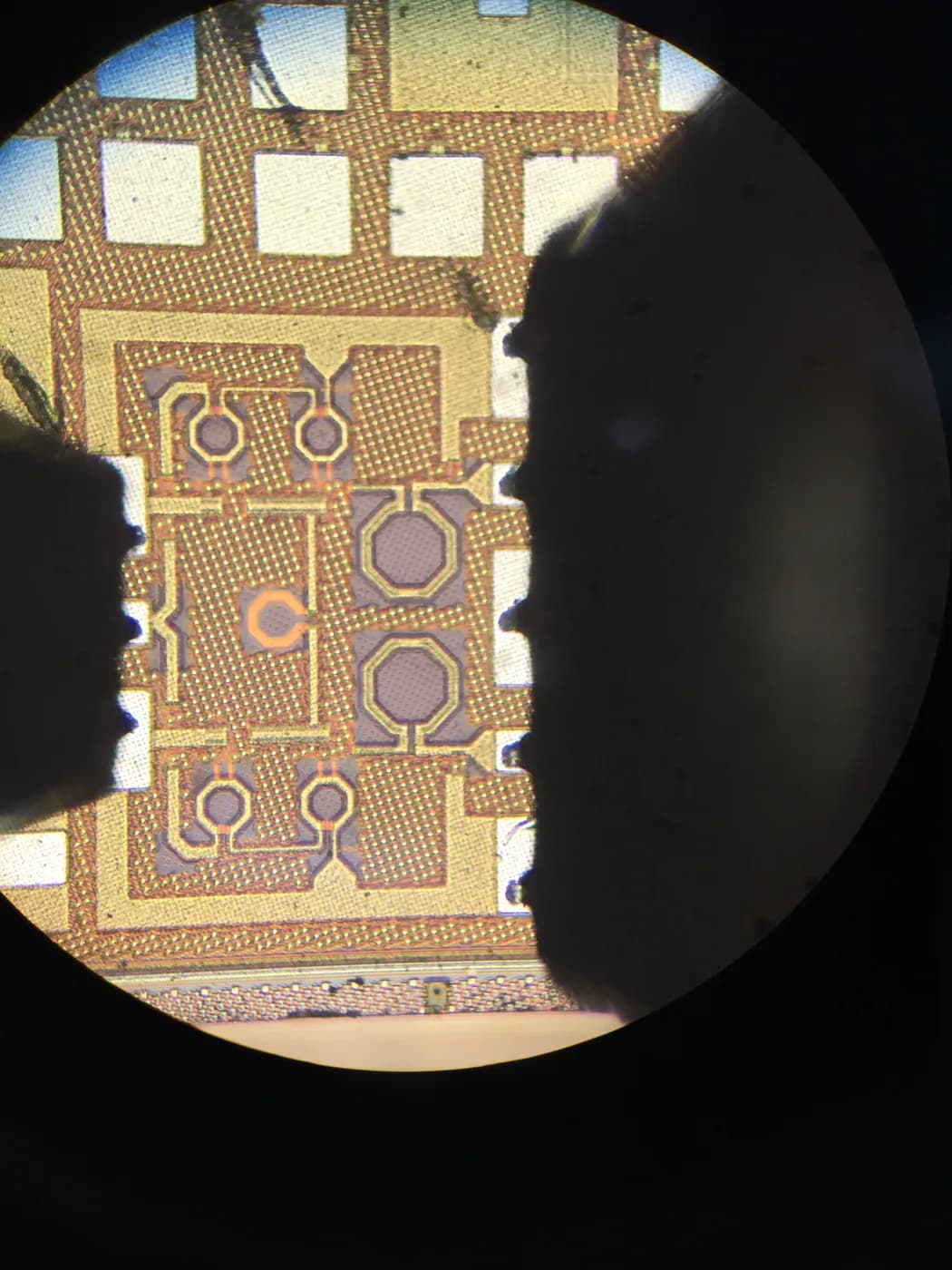
We captured probe-station die shots at each return. These were not decoration — they became the customer's documentation evidence and shortened their internal review cycle.
A good die photo also helped debug: pad geometry and probe marks told us, at a glance, whether the test setup or the silicon was the problem.
What we would tell a similar team
Plan the measurement before the mask. RF learning is only as fast as your test plan.
And treat shuttle selection as a scheduling decision, not a procurement afterthought — the window you miss is the quarter you lose.